Lineage
We stand on the shoulders of giants.
Nothing here was invented from nothing. COROS continues a tradition that spent fifty years working out how human beings coordinate, change, and come alive in language. This is a note of gratitude to the people who cleared the way.
A machine made of language
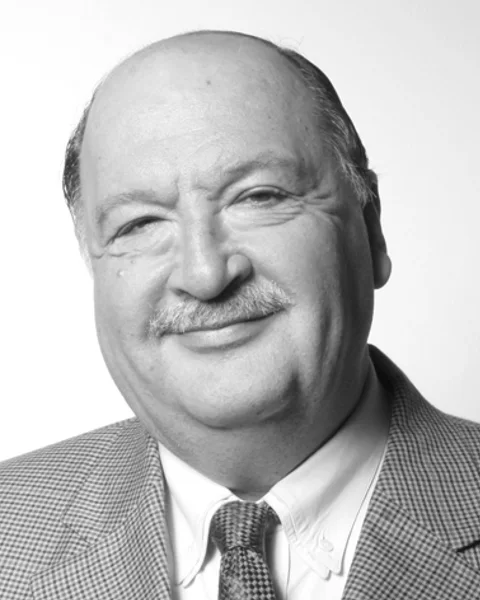
In 1971, a young engineer named Fernando Flores, Minister of Finance and Education in Salvador Allende's government at the age of twenty-seven, set out to do something audacious: steer an entire national economy in real time. He brought in the British cyberneticist Stafford Beer, and together they built Project Cybersyn, a network of telex machines feeding a single operations room. It was an attempt to coordinate a whole society through information rather than command, and it ran decades ahead of its time.
The 1973 coup ended it. Flores spent three years as a political prisoner. When he reached the United States, he carried a question that would define the rest of his life: what actually coordinates human action?
At Stanford and Berkeley he found his answer among the philosophers. From Hubert Dreyfus he took Heidegger's account of being, and a clear-eyed sense of the limits of artificial intelligence. From John Searle and J.L. Austin, the theory of speech acts: that language does not merely describe the world, it acts on it. We make requests, promises, declarations. From Humberto Maturana and Francisco Varela, the biology of cognition, autopoiesis, the way a living system produces itself as it copes with its world. Flores wove these three strands, being, language, and life, into a single practical tradition.
With Terry Winograd, he set it down in Understanding Computers and Cognition (1986), a book that broke with the prevailing logic of information systems and declared that work is coordinated in language through networks of commitments. It remains one of the foundations we build our own AI on.
Then he built it. The Coordinator, from his company Action Technologies, was software that treated conversations, requests, and promises as first-class objects: the conversation for action, rendered in code. It organized office life around linguistic distinctions twenty years before Facebook or Twitter. On the small team of programmers who built it was a young James Gosling, who would go on to create the Java programming language. A machine, made of language.
The Flores tradition
What Flores built was not a product but a body of distinctions: moods, speech acts, commitments, breakdowns, trust, care, the conversation for action. A rigorous, teachable way to expand human capacity in enterprises, families, and lives. We call it, endearingly, the Flores tradition.
Much of that work lives on today in his own writing. We recommend that everyone who uses COROS read Conversations for Action and Collected Essays ↗, a lifetime of private papers gathered and edited by his daughter Maria Flores Letelier. It is a treasure, and it will deepen everything you do here.
The tradition continues, too, at Pluralistic Networks, led by another daughter and a scholar in her own right, Gloria Flores, whose book Learning to Learn and the Navigation of Moods maps the moods that show up at every stage of learning: the confusion and anxiety of the beginner, the arrogance of the expert. Our own Mood Board carries that lineage forward.
How it reached us
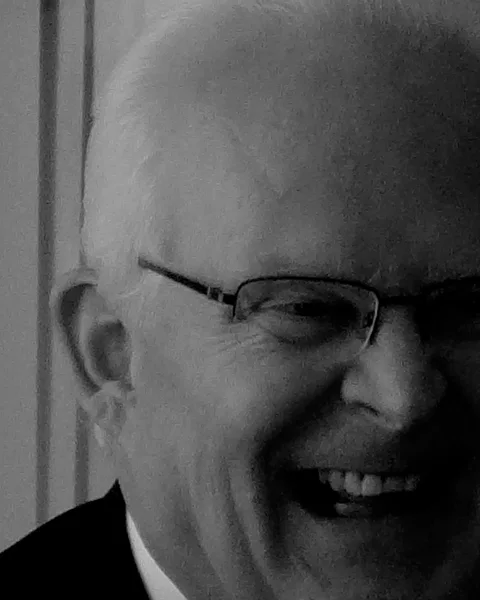
Most of all, we are indebted to Chauncey Bell, Flores's long-time collaborator and right hand in building the Coordinator. Chauncey worked patiently with our founders for years, and eventually brought us to Fernando himself. His book, Mobilize!: Dancing in the World ↗, gathers much of that work.
From Chauncey we learned to hear the word conversation for what it is: con (together), verse (to turn), tion (the ongoing process). To converse is to turn together, to change, with another. That is the whole of it, and the center of everything we build.
What we carry forward
We come to this in a new era, one where it is fashionable to ask whether the human being can be replaced. We think that is the wrong question. The human being cannot be replaced. But the human being can be expanded.
So we built a different kind of AI. Not one that answers for you, but one that breaks you out of the narrow, narrated life, that helps you live with your eyes open, in a mood of possibility, serenity, and a certain alertness. That mood is the deepest thing we learned from Fernando.
One question sits under all of it, and it is the question we have given our work to: what is a human being, living, working, thriving, or suffering, and what might be done about it? The daily notes of gratitude we receive, from within this very tradition and far beyond it, tell us we are pointed the right way.
With utter gratitude to those who saw the future long before the world was ready, and cleared the way for us.
Fernando Flores · Gloria Flores · Chauncey Bell · Terry Winograd · Hubert Dreyfus · John Searle · Humberto Maturana · Francisco Varela · James Gosling, and the whole tradition we carry.